Founder & Product Designer · Jul 2025 — Sep 2025
A Telegram-native course platform I founded and designed: schools, courses and lessons that never leave the app, checkout in TON and Telegram Stars, six ways to grant access, AI-drafted course structures and a referral programme. Owned it from concept to a working beta — and stopped it there, with a diagnosis I still use: no discovery before building, and a first release that was the whole product rather than the narrowest testable slice.
My role
I founded, designed and built it in eight weeks of evenings: scope, flows, design system, checkout in TON and Telegram Stars, and the app itself. I took it to a closed beta of about fifty people and made the call to stop: nine locales, AI generation and referrals were built before one real author had been tested.
Course Center is a Telegram-native course platform: the video, the payment and the lesson on the same screen the audience never left.
Creators and small schools had already pulled their audiences into Telegram — channels, group chats and communities were where their students actually showed up. But selling a course pulled everyone back out again: the videos lived on YouTube or Vimeo, the payment happened on some external page, and access was handed out by hand, one student at a time.
The teaching sat in one place; everything that turned it into a business sat somewhere else. Course Center started from a simple question — what if none of that had to leave Telegram?
That split leaked money at both ends. Hosting video cost the creator a monthly bill — and once a lesson was out there, a single paying student could forward it into a free chat and the next ten sales quietly disappeared.
Getting paid was no better: every purchase sent a student off to a checkout they didn't recognise, and every access grant was manual work the creator had to do themselves. The tools existed — they just weren't in the same place, and the seams were exactly where the value drained out.
Course Center's whole bet was to bring the video, the payment and the lesson back onto the same Telegram screen the audience never left. Two capabilities carried the product — and became the reason people chose it over stitching their own tools together:
Free, leak-proof video
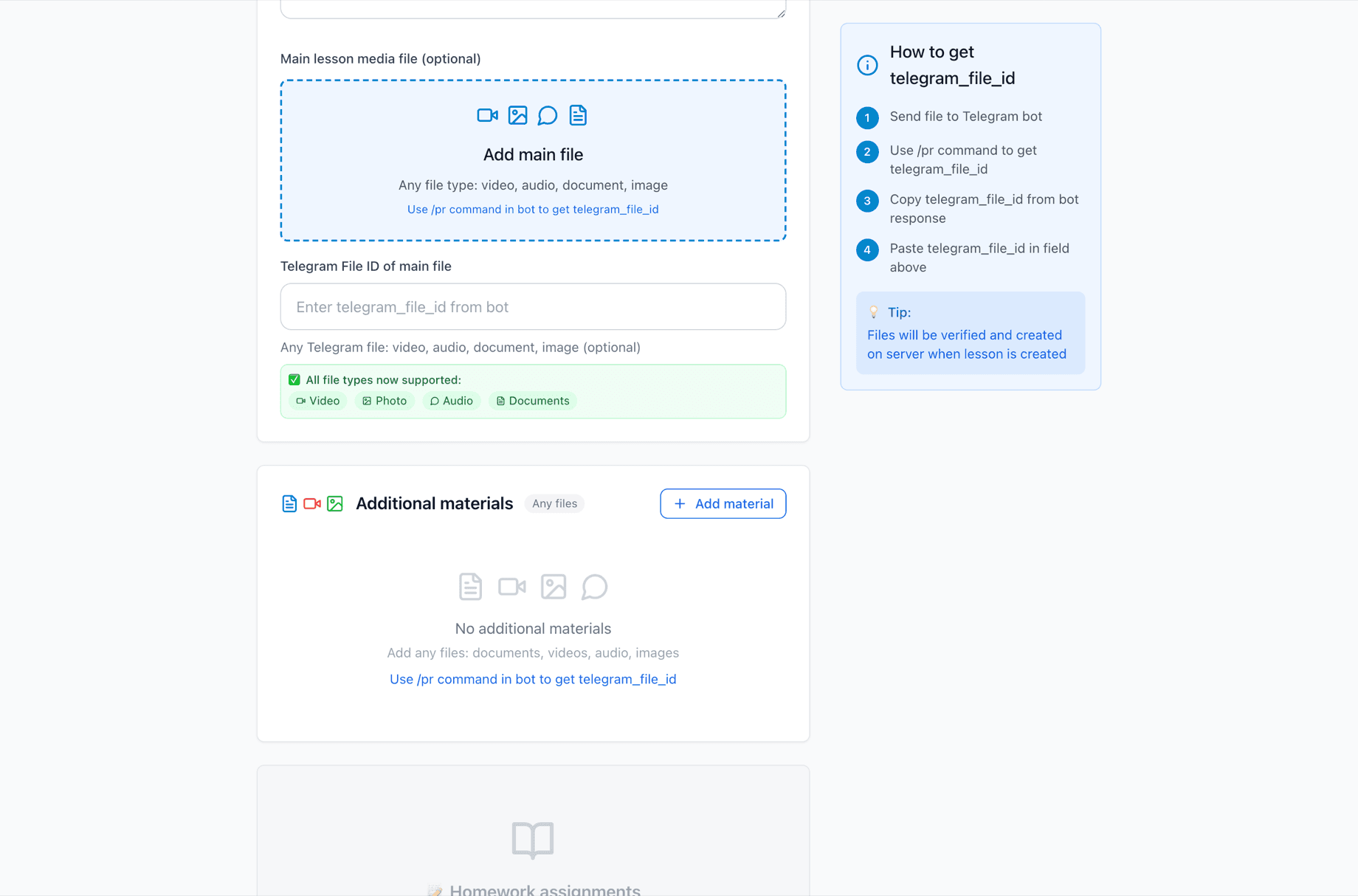
Lessons stream inside the Mini App on Telegram's own storage — no Vimeo or YouTube bill — with forwarding and downloads switched off. A paid lesson stays with the person who paid for it instead of leaking into a free chat.
Payments that never leave the chat
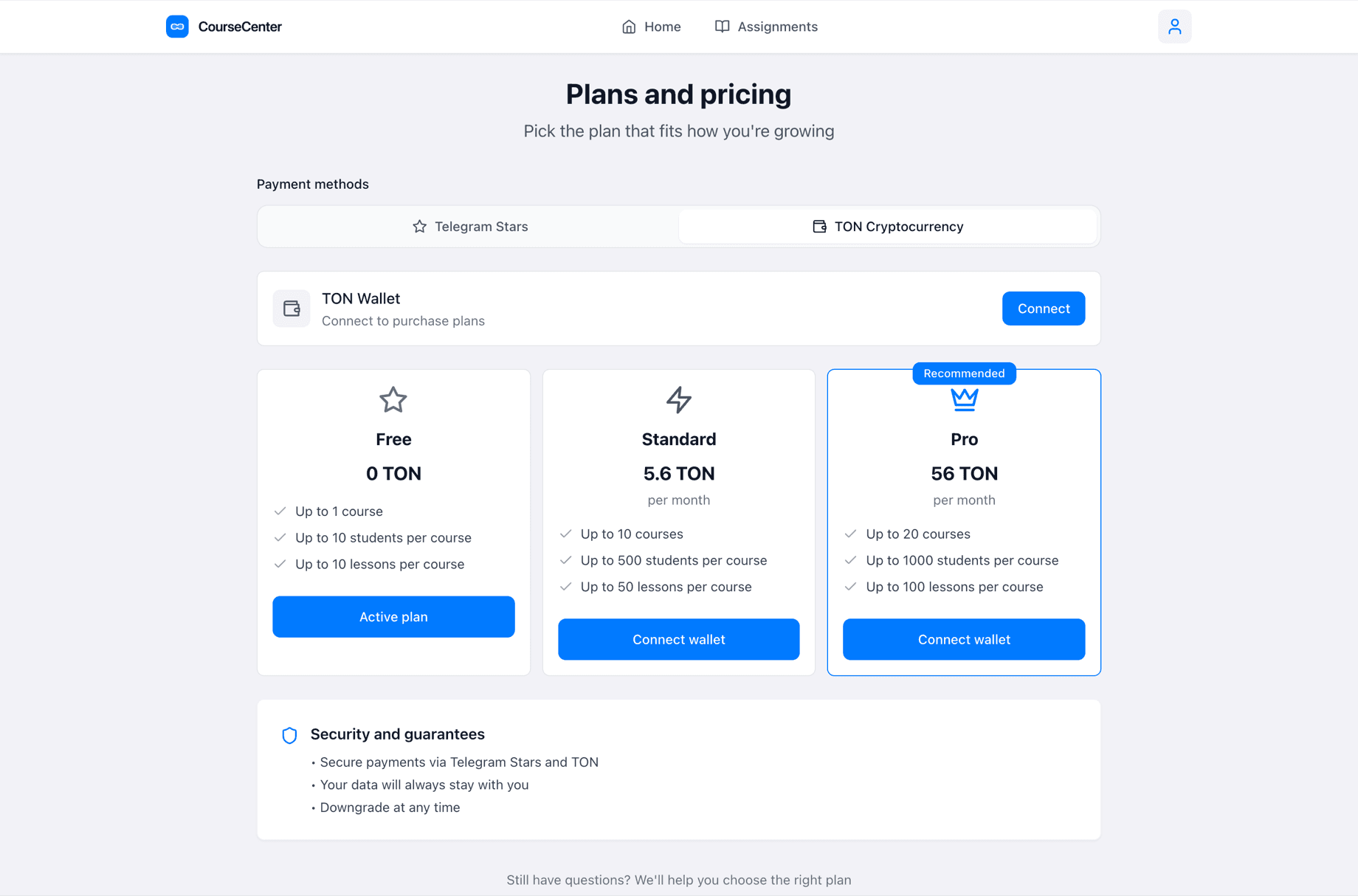
Checkout happens in TON and crypto right where the lesson lives. Buying is a tap inside the app students already trust, not a detour through an outside processor — and access unlocks the moment payment clears.
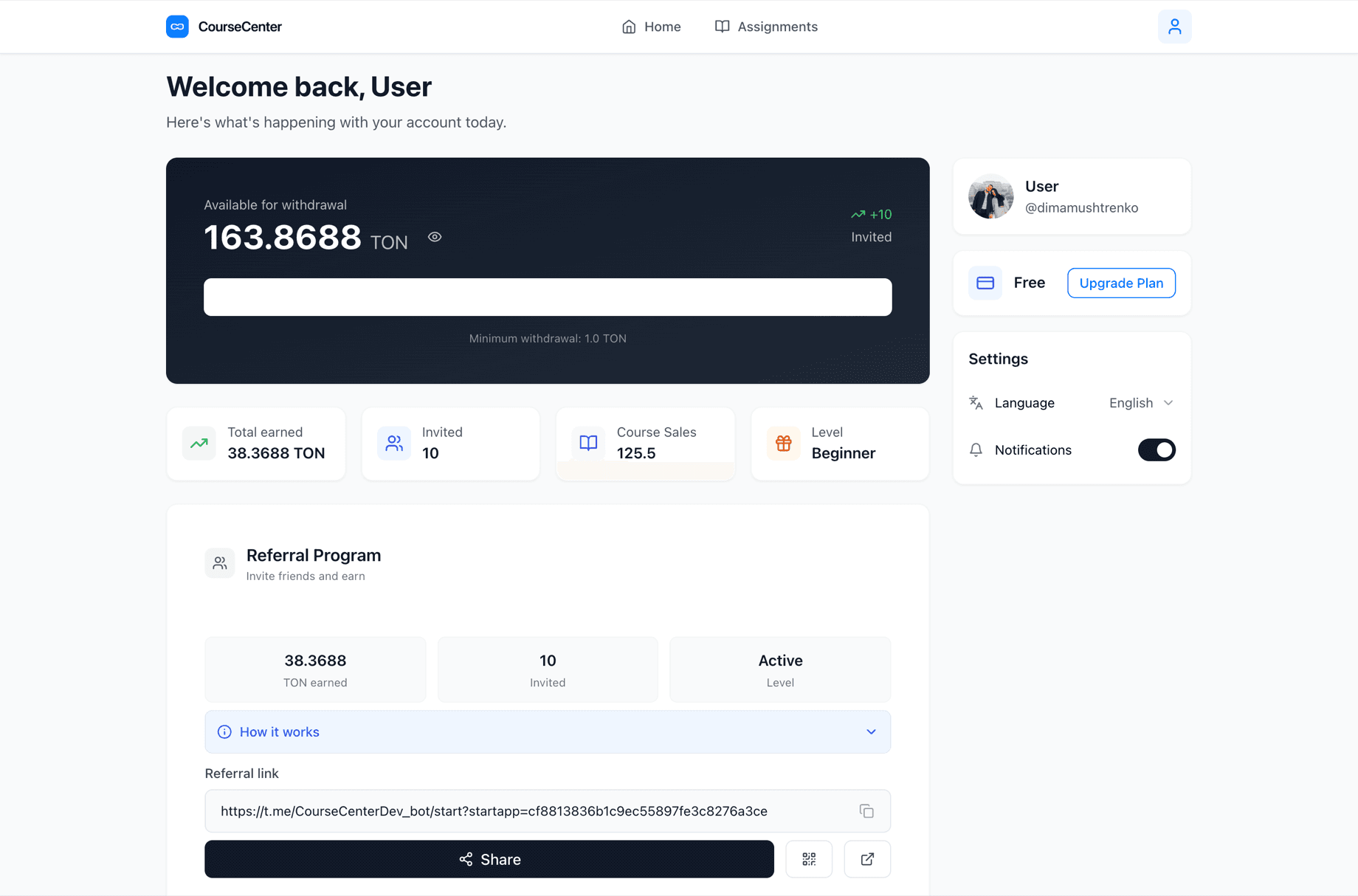
The bet became a working platform: schools, courses, modules and lessons; six ways to grant access to a course; homework with grading; TON and Telegram Stars checkout; a referral programme with payouts; and a support bot behind all of it. Three languages, one account model, one design system.
The screens below are the real thing, not a mockup — the app running against its own API and its own database, photographed a few minutes ago.
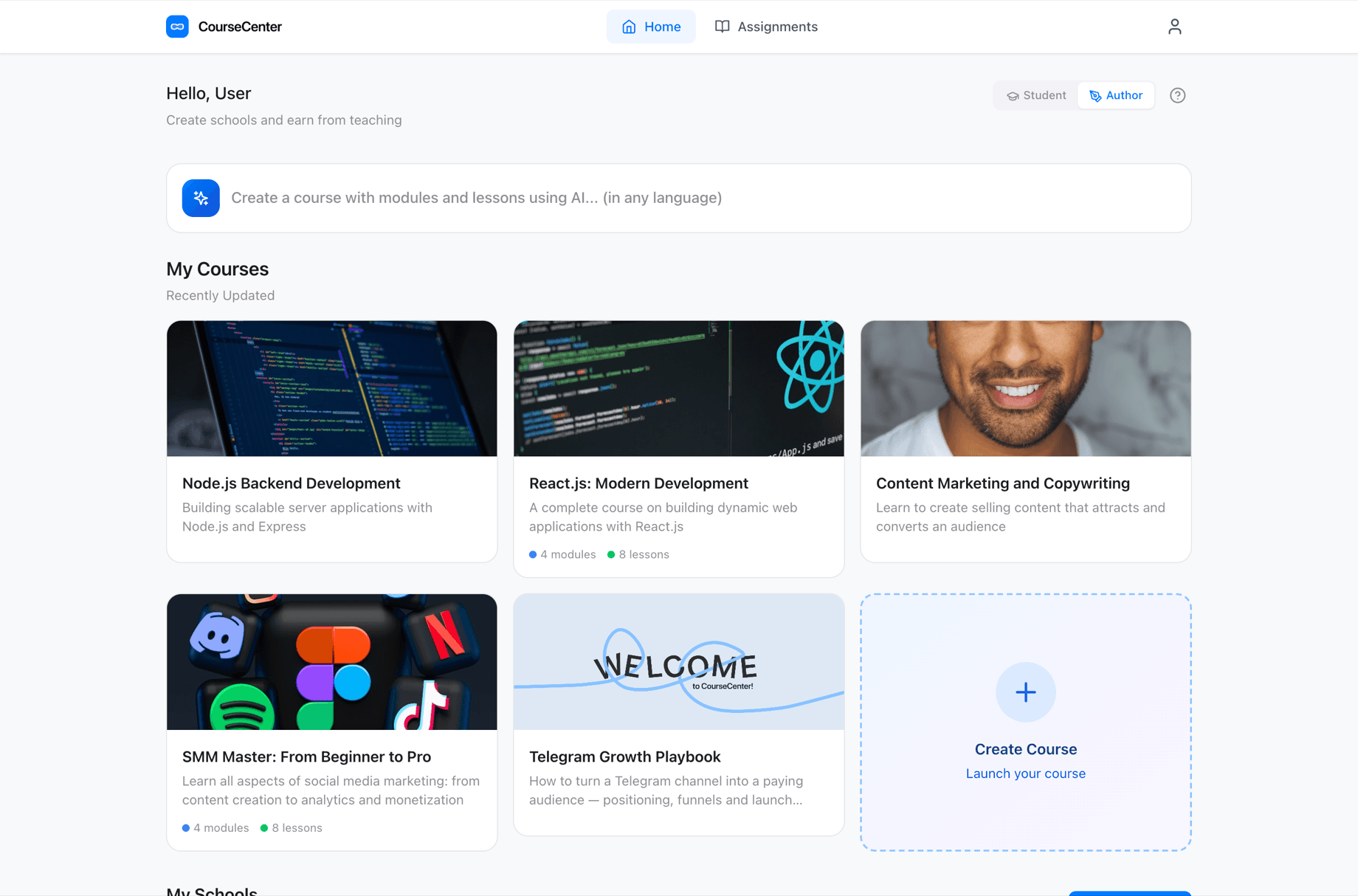
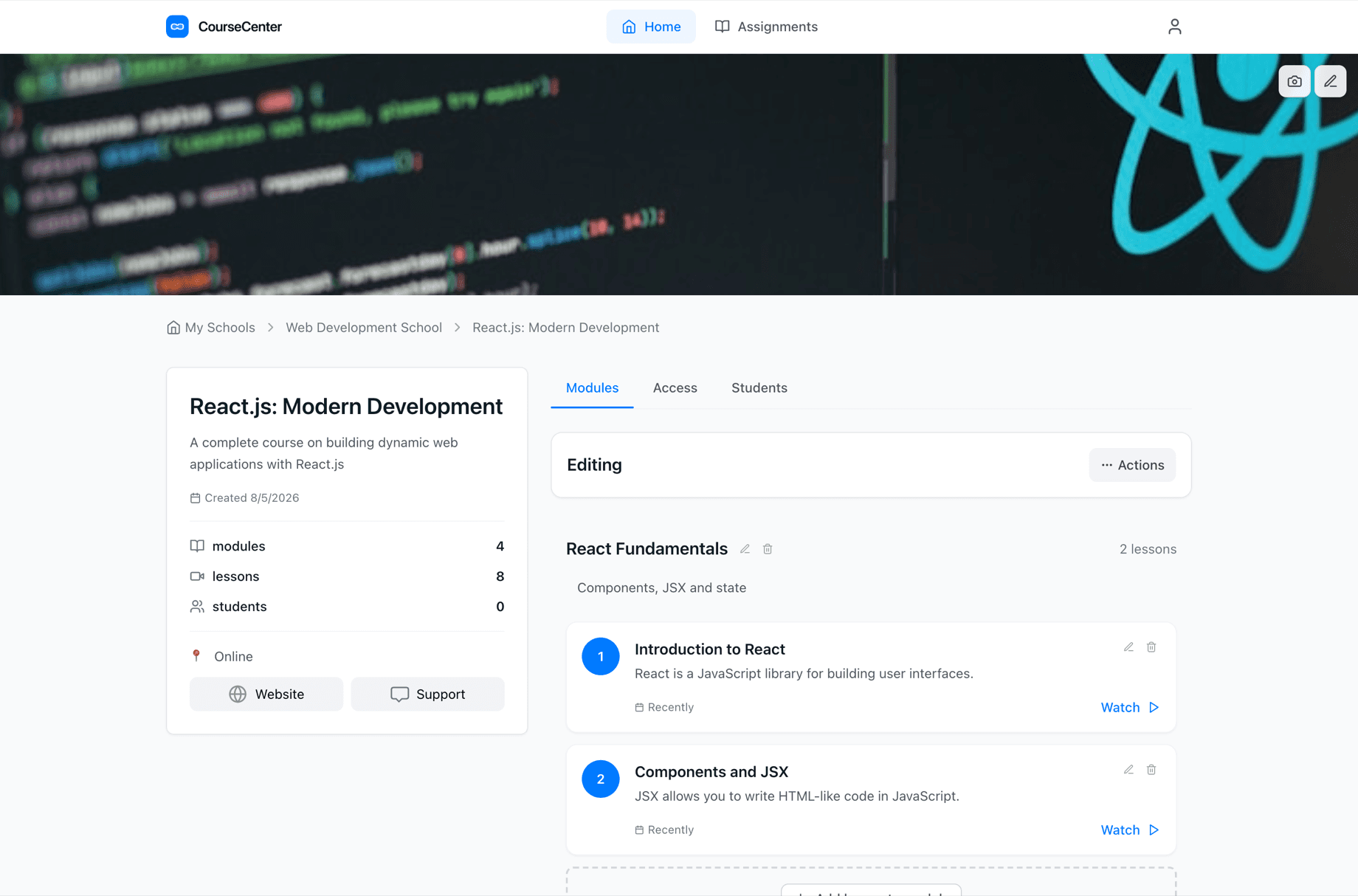
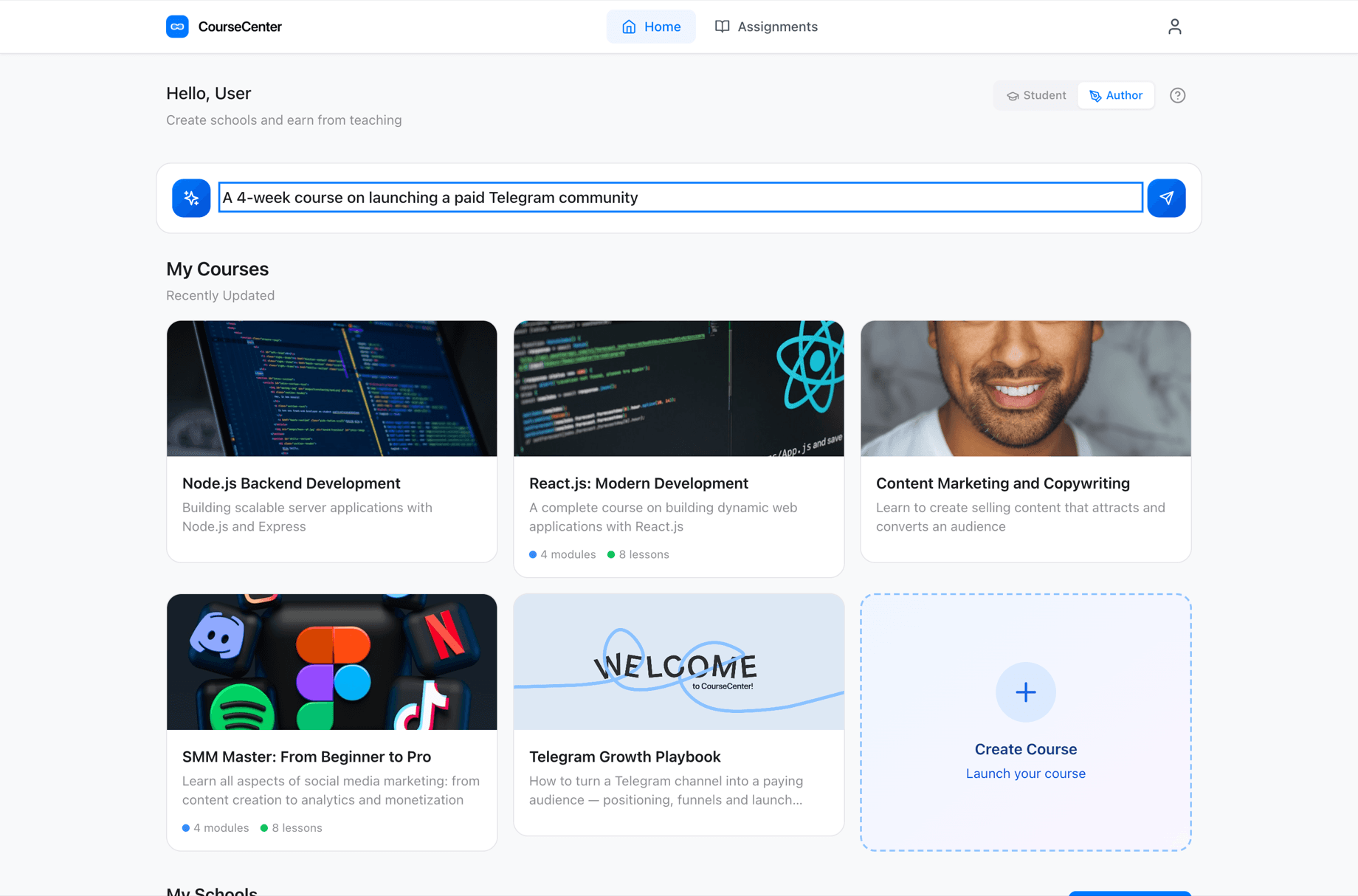
A creator is almost always someone else's student first — they buy courses in the same app they sell them in. So rather than two account types and two logins, there is one account with a switch: Student and Author are the same person seeing a different surface. Switch to Author and the AI bar, the course builder, the access controls and the student roster appear; switch back and they're gone. Nothing to sign up for twice, nothing to migrate.
The slowest part of launching a course was never the teaching — it was the hour of structuring it into modules and lessons before anything could be published. So the builder starts from a sentence: describe the course in any language and the platform proposes the whole structure, which the creator then edits like any other draft.
Everything after that is ordinary and deliberate: reorder a module, drop a lesson into another one, attach video through the bot, set homework and a grade. The AI writes the first draft of the shape; the creator still owns the course.
The rule that kept the video and the payment inside Telegram let the product grow inside it too. A student who liked a course could share an invite link right in the chat — friends joined, some of them bought, and a few passed it on. Every hop stayed in the app, with no landing page or ad account in between: distribution ran on the same rails as everything else.
More projects

Trend Arena
A Telegram mini-app where a token's supply burns faster the more the internet talks about it.
CARTUR
One man in Prague brings your car home from a European auction, so the website opens with that drive.
Hattat-Decker
A grower champagne house from the Côteaux Sud d'Épernay, told through one bottle that moves with your scroll.
NELA
A firm that prepares walls for the electrician gets a website with one protagonist: a wall.